Gathered around a table, eating and laughing like old friends, three women share intimate stories about their lives, their challenges and their relationships.

All at different stages in their lives with different backgrounds and varied interests, Robin Flores, Gina Weatherford and Gail Blankenship might never have met, much less have become friends, if they hadn't been forced to cope with a common enemy.

Breast cancer united them.

"I really think that we were brought together for a reason. I just felt drawn to them," said Robin.

"I never felt a pressure with their friendship of having to be anybody but me. ... And what I get from them is just total strength and that feeling that I'm not alone."

Strangers a year ago, the three women have developed an extraordinary bond. They relate on a very personal level. They feed off of each other's strengths, support one another in their weakest moments. They speak regularly - discussing everything you could imagine and often without even a mention of the cancer that has invaded each of their bodies.

"It doesn't matter who you are. Cancer doesn't discriminate. We've learned that,'' Robin said. "It doesn't care who you are, what money you make, how you conduct your lifestyle. It's there and it's real. Regardless of what cancer you have, it's all ugly and we're all in the same boat."

"It's all incurable,'' Gail added solemnly.

If hearing that statement made you brace for the "pity party" to follow, relax. That's not what you'd get from this charismatic trio.
Robin, Gina and Gail don't consider themselves victims at all. They're more like warriors. And while they discuss everything from Uncle Kracker's latest album to Robin's wedding plans and a computer virus that occupied much of Gail's day, they always come back to the same message: Cancer will change your life, but it doesn't have to change who you are.
"Don't feel sorry for us. But don't for a minute think that it couldn't happen to you,'' said Gail. "When you see three women with this variance in age, it's proof positive that it can happen to anyone.''


Gina Valk Weatherford was 45 when she was diagnosed with breast cancer on June 4, 2002.
During an annual physical, she expressed concerns about some pain and discomfort she'd been experiencing in her breast. Her doctor, well aware of Gina's strong family history of breast cancer, decided not to take any chances. An ultrasound revealed a small tumor.

"My tumor was in a different area than I felt my pain so I feel like [them finding it] was just a blessing from God,'' said Gina. Within 20 days, Gina was having surgery to remove the tumor. "It was a very small tumor but because I paid attention to a symptom in my body, I caught it early."

Gail Blankenship was 52 when she learned she had breast cancer last summer. But her diagnosis didn't come so easily. She had just returned from a two-week vacation celebrating her 10th wedding anniversary when she started suffering from "excruciating back pain." She visited her doctor and was given a shot of cortisone. When it didn't help, she made a second visit to her physician who found a really tender spot in her rib area.
"He ordered a bone scan and it was abnormal. At that point, we knew that I had cancer, but we didn't know what kind it was or where it was coming from,'' Gail said.
After a month without a diagnosis, they did a biopsy of a suspicious lymph node which, at the Blankenship's request, was sent along with other test results to Memorial Sloan-Kettering Cancer Center in New York where it was determined that Gail had breast cancer.
"It was quite shocking. But I think the day I found out the bone scan was abnormal was much more of a shock to me than finding out it was breast cancer,'' Gail said. "There was a lesion in the breast, but it was so small that it never showed up. It had already metastasized so it was in the spine and in the ribs. I never thought about breast cancer moving to other parts of the body. I didn't know that was a trait of that particular cancer. I didn't relate back pain to any type of cancer."

Robin Flores was a 35-year-old widowed mother of two, with no family in the immediate area and in the midst of a brand new relationship when she discovered a lump in her breast in the fall of 2002.
"I knew it the minute I felt my lump. I said ‘Oh sh--. I've got breast cancer.' I just knew it. I thought ‘I'm going to have to go through this,''' Robin recalled.
When her mammogram revealed a suspicious shading, her doctors ordered a biopsy.
"When I went to see Dr. Brock on Nov. 12, I remember being at this overwhelming calmness in my life in that elevator. I went in there, and I sat on his table. He put his hand on my leg and he said, ‘We're going to have to get that thing out of there,'' Robin said.
"Right then, I went from this very aggressive, assertive, confident independent woman to being the most humbled, child-like person.''

Brock explained that Robin had a very large malignant mass and that she'd need a double mastectomy.


Absolute and total shock are the only words Gail can find to describe her reaction to the diagnosis.
"I had no earthly idea, had had no prior symptoms and was very active. I was just totally shocked,'' she said.
Then came the questions. They all asked the same questions: Am I being punished? What have I eaten? Is it because I didn't exercise? Why me? Why now?

Coincidentally, all three women - still strangers to each other at the time - sought answers and treatment from the same oncologist, Daryl Pierce. But that wasn't how they met.
Robin knew Gail's husband, David, and recognized him in a chance meeting at the hospital in December. He introduced her to Gail, and they agreed to talk soon. Soon after that, Robin met Gina in the oncology department. They talked for nearly two hours and before long were swapping stories and sharing intimate details of their lives over coffee at the Cracker Barrel.

‘It's really not about the hair'
"Holy crap, I'm going to be bald."
That's what Robin remembers thinking when they told her she'd have to have chemotherapy.

"I realized that you have really absolutely no choice but to comply and follow the rules of chemotherapy,'' said Robin. "You follow the rules and then you have two choices: You can either give up and pull the covers over your head and let it take you over. Or you can say, ‘I'm going to fight this.'''

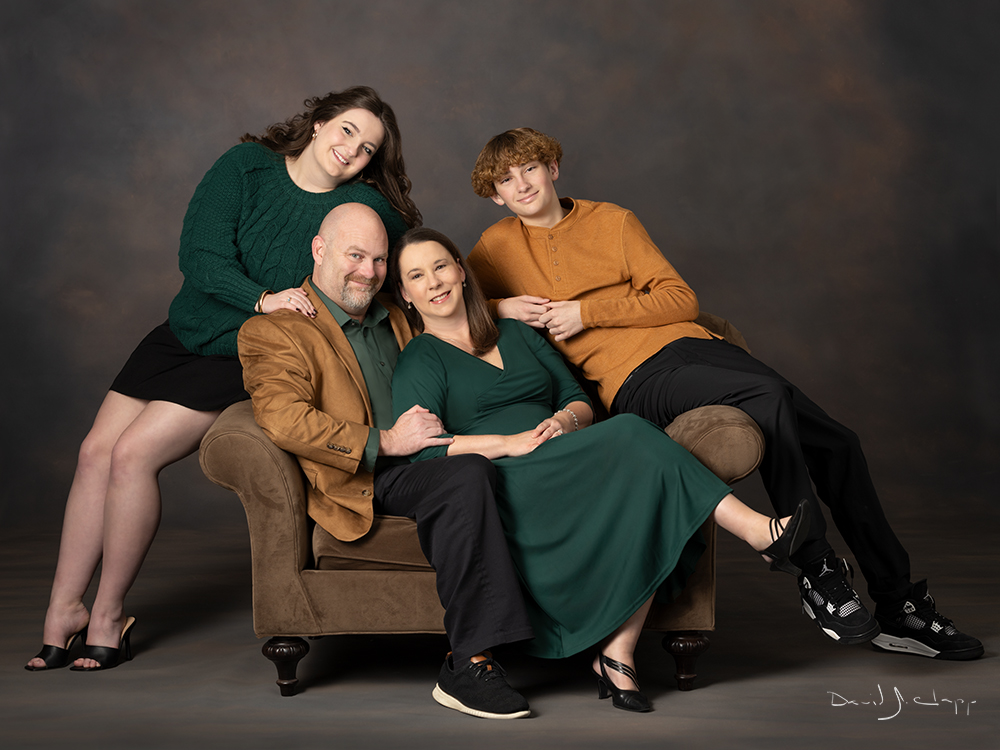
So in May, Robin asked her newfound friends to join her for a photo shoot with photographic artist David Clapp. Her hope was that David Clapp would be able to capture the bond that had developed among them, the emotions of the disease and the essence of their message in his art.
"When I looked at [Gail and Gina], all I saw was strength and power. I just wanted to find some way to capture that,'' said Robin.

The intimate photographs, which Robin hopes to hang on the wall in the oncology department or use in a pamphlet, are very real, very dramatic and very telling.
"When you're up there in that chemo room, when you're in that zone, you want to see something that's real. How much more real can you get than three bald-headed women?'' Robin asked.

The timing of the photo shoot couldn't have been better either.
"We were all at different stages in those pictures, too, which is neat to see,'' Gina said. "You can look at those and see that you're still going to be beautiful here and here and here.''
They want women with cancer to realize that it's OK to be yourself and to deal with your cancer in the way that's best for you.
"You can still be you. You can still be beautiful and still have panache and everything, even though you've got cancer. You can still carry it off as the same person you are. You don't have to change. This doesn't have to change who you are,'' Gina said.

And it really isn't about the hair, Gail stressed.
"That'll come back. All of ours is coming back. It's about knowing that however you choose to deal with it - whether that's wearing a wig or a baseball cap or just being bald - is OK. It really is OK."


Gail, Gina and Robin also hope women will reach out to each other, as they have.
"When you lose your hair, people that you don't even know know that there's something wrong. Up until that point, you can hide it,'' Gail said.

That's why, now, when people they barely know ask about their new hairstyles, both Gina and Gail tell them what brought on the change in their appearance.
"I usually say what I've been through. Honestly, I don't know if it's therapy for me or my way of reaching out to people. I say, ‘I went through breast cancer and this is a result of that,''' said Gina.

"I do that, too - for both reasons,'' Gail said. "I think the more you say it, especially initially, the easier it is for you to deal with it because it's really hard to come out and say that. I think that's what I mean about it not being about the hair. You've got to tell people because you need that support."

‘You've got to allow people in your life'

People want to help. That's a given, the women agreed. It's taking that help that's difficult.
"You've got to allow people in your life and that was so hard for me,'' Gail said. Gina remembered her sister coming over to clean out her fish pond, and her refrigerator. "Whatever it was that was causing me stress, she'd come and do - those little things that you don't have the energy to do,'' Gina said.
Any number of friends would have probably done the same thing, Gail pointed out, if only they'd known.

"I'll know now. If I hear somebody has a problem, I'm not going to just pick up the phone and say, ‘Well give me a call, if you need something,''' Gail said. "I'm going to say ‘Can I mow your yard?' ‘Can I bring your supper?' ‘Can I pick up the kids for a little while?'"

The support may come from unexpected places. Robin found it from her children, her husband, Barry, his family and these women who before her diagnosis were total strangers. Whatever your source, the key is to build an unwavering network of positive support.

"I got overwhelmed by lots of information. You go to the Internet, and you find yourself crying. The more information you gathered, the more overwhelmed you got,'' Gina said. "Finally, my husband said you need to get a core group of people who can support you and stay away from the Internet."

And you can't assume the people who love you will automatically know what to do, the women stressed.

"I learned that unfortunately, when you have cancer, you have to be the one to give the other people permission to approach you. You've got to acknowledge that you've got it and you've got to talk to them about it and you've got to help them understand,'' Gail explained.

Cancer robs you of your joy, Gail once explained to Robin.
"I think it helps to know that you're not alone,'' said Gail.
"You know that from your family and friends, but [with Gina and Robin] you know that you're not the only person in the world that has breast cancer. And I think that's a big comfort. It's a big help to me anyway."

Through their photographs, the women hope they might provide a little bit of inspiration and support to other women with breast cancer. And they don't plan to stop at that. Robin, particularly, is intent on using her experiences to help others.

"I think this is my calling. It's going to be a part of my life, one way or another, until the day I check out,'' said Robin. "I'm not going to cut it off. I can't cut it off. I'm not going to dwell on it, but I'm going to be real about it. Being real about it is the only way I see a person can get through it."

top